
A Year Like No Other
As 2025 comes to a close, we find ourselves reflecting on a year that reshaped the food and farm policy landscape: from major disruptions in federal agencies to stalled policymaking in Washington, farmers and communities continue to feel the impacts. The historic government shutdown this fall was just the most recent situation to put our food and farm system under strain. Stable federal programs are critical for farmers and families across the country, and funding delays and terminations, shifting agency decisions, and the loss of experienced staff at USDA have created hardship for millions, especially those who already faced systemic barriers to accessing USDA programs and services.
At NSAC we are always guided by our members and the federal policy priorities we set together – this year those included strengthening the farm safety net, advancing climate resilience in food and agriculture, and building strong local and regional food systems that benefit farmers and families. We moved quickly and creatively to introduce bills in Congress designed to carry reforms and investments forward, we supported farmers and nonprofits navigating agency funding disruptions and terminations with guidance and peer support, and we organized our coalition to speak out in hundreds of channels nationwide – from social media to radio to local and national news – to elevate farmers’ and families’ stories about what was happening on the ground. This blog post reflects on that work, the progress made, the setbacks we faced, and the resolve that carried our coalition through a year marked by both instability and extraordinary collaboration.
Building Better Policies in Washington for the Farm Bill and Beyond
Congress failed to pass a full five-year farm bill again this year – leaving everyone who relies on this critical major legislation stuck for another year without an opportunity for real policy reforms or investments. NSAC and nearly 600 national, state, and local organizations delivered a joint letter to Senate and House leadership, as well as Agriculture Committee chairs and ranking members, urging Congress to advance not only an overdue farm bill but one that truly supports family farmers, strengthens rural communities, expands healthy food access, and more. The letter also called on Congress to correct harmful provisions enacted through the recently passed budget reconciliation bill.
We still saw some legislative wins this year: we helped draft, refine, and introduce nearly a dozen “marker bills” this year that together will build better farm and food policy in a future farm bill.
Farm Safety Net
- Save Our Small (SOS) Farms Act – modernizes federal farm safety net programs to make crop insurance and disaster assistance more accessible for small, specialty, and beginning farmers, helping them stay on the land despite economic and climate challenges.
- Crop Insurance for Future Farmers Act – makes crop insurance more affordable and accessible for new and veteran farmers by increasing the premium‑subsidy support and extending the time they’re eligible.
- Farm Ownership Improvement Act – establishes a five‑year pilot program allowing farmers and ranchers to get pre‑qualified or pre‑approved for direct farm‑ownership loans to make it easier for new and beginning farmers to secure land.
- Capital for Beginning Farmers and Ranchers Act – creates a multi-year FSA loan pilot to help new farmers access flexible capital for startup costs, infrastructure, and management systems, addressing high barriers to entry and supporting the next generation of farmers.
- Withstanding Extreme Agricultural Threats by Harvesting Economic Resilience (WEATHER) Act of 2025 – modifies the federal crop-insurance program to create a new type of coverage that pays farmers quickly and automatically when severe weather hits their area, giving them a simpler and more reliable safety net as extreme weather and natural disasters become more common.
Local and Regional Food Systems
- Strengthening Local Food Security (SLFS) Act of 2025 – helps small and mid-sized farmers sell more locally grown foods to schools and community programs, boosting farmer income while giving families better access to healthy food.
- Local Farmers Feeding Our Communities Act – helps small and mid-sized farmers sell more local food through state and tribal programs, creating stable markets for producers while improving access to fresh, nutritious food for families in need.
- Strengthening Local Processing Act (SLPA) – standing challenges in the livestock and poultry supply chain. It advances a more resilient, competitive, and regionally rooted meat processing sector by updating the Cooperative Interstate Shipment (CIS) program, increasing size eligibility, improving state cost shares, and requiring FSIS outreach. Together, these reforms would enable small and mid-sized processors to expand sales across state lines and strengthen regional food systems.
Climate Resilience
- Agriculture Resilience Act – would adapt the farm bill to today’s realities by investing comprehensively across conservation, research, renewable energy, and rural development to help producers build resilience, boost profitability, and achieve net-zero agricultural emissions by 2040.
- Strong Farms, Strong Futures Act – strengthens the Conservation Stewardship Program by creating region-specific climate mitigation practice bundles and higher cost-share incentives, giving producers more options and greater support to build complex and resilient conservation systems.
- Support the WEST Act – strengthens key USDA conservation programs by boosting cost-share for water-saving and drought-resilient practices, expanding support for perennial systems, and enhancing soil-health outreach and testing to better serve producers in Western arid regions.
- Organic Science and Research Investment (OSRI) Act – strengthens USDA’s organic research and data programs by boosting funding, coordination, and support for organic and transitioning farmers so that innovations in soil health, climate resilience, and sustainable production can benefit all producers and bolster rural economies.
- Innovative Practices for Soil Health Act – strengthens USDA conservation programs to better support farmers adopting perennial and agroforestry systems, enhancing technical assistance, research capacity, and incentives to improve soil health, resilience, and long-term sustainability across US agriculture.
- Converting Our Waste Sustainably (COWS) Act of 2025 – offers incentives for livestock and dairy farms to manage manure sustainably by funding practices and composting methods that cut greenhouse‑gas emissions and improve soil and water quality.
The government shutdown resolution package passed in November included a one-year extension of the Agriculture Improvement Act of 2018 – the farm bill. This extension is largely “clean” – meaning without major changes to the 2018 bill – but it does have one problematic change that NSAC is fighting to remove in future bills: the bill removes key payment limits and income eligibility rules for EQIP and CSP, effectively enabling the largest operations to access unlimited conservation funding, shifting conservation resources away from smaller and mid-sized producers, and exacerbating existing trends where demand far exceeds available resources, shutting out access to these popular programs.
Protecting Federal Investments in Sustainable, Equitable Policy
This year’s federal budget process, shaped by a major reconciliation package and competing House and Senate spending proposals, set in motion decisions that will influence conservation, farm viability, and community resilience for years to come.
The spring and early summer centered on the so-called “One Big Beautiful Bill Act” (OBBB), a major reconciliation package that folded remaining Inflation Reduction Act (IRA) conservation dollars into the permanent farm bill baseline, securing long-term funding but removing the climate guardrails that ensured those dollars supported climate friendly practices. OBBB shifted significant resources away from nutrition assistance programs and toward commodity programs, putting vulnerable communities at risk while abandoning programs that support the vast majority of farmers and rural communities. Overall OBBB represented a mixed outcome: a long-term win for conservation funding, but a failure to invest in long-term solutions that promote markets and invest in production systems that build all farmers’ autonomy and self-determination.
Appropriations debates intensified through the summer. The House advanced a $25.5 billion FY26 agriculture bill along party lines with major cuts to conservation, research, and local food systems programs, along with several harmful policy riders. The Senate, in contrast, passed a bipartisan $27 billion bill that largely preserved funding for core farmer- and community-serving programs. With no agreement in place by September 30, the government entered the shutdown that lasted from October 1 to November 12.
The FY2026 agriculture appropriations bill included in the shutdown resolution reflected continued funding cuts to several important USDA programs. While some programs maintained their current funding levels, others saw reductions, limiting USDA’s capacity to provide technical assistance, support innovative production, and strengthen local and regional food systems at a time when farmers need those services most.

Pressing USDA to Better Serve Farmers
With the start of the new Trump Administration came major shifts in USDA leadership and direction. Throughout the year, NSAC challenged the agency’s harmful program terminations, staffing cuts, and policy reversals, while lifting up farmer stories and working to advance our coalition’s priorities wherever possible. NSAC and partners worked extensively to secure funding from the Inflation Reduction Act of 2022 for critical conservation and rural energy programs this year. Delays and cancellations in payments by the Trump Administration left tens of thousands of farmers and ranchers without funds that were already contractually committed by the federal government. Despite over $2.3 billion in signed contracts nationwide, these interruptions forced farmers to cover project costs out of pocket, threatening farm viability and undermining trust in federal programs. Across all of our campaign priorities, our coalition worked to ensure USDA hears from the producers most affected by its decisions and remains accountable to the communities it is meant to serve.
Proposed USDA reorganization: In July, USDA announced a reorganization proposal with little detail and no meaningful input from farmers. NSAC submitted extensive comments outlining how the plan could destabilize critical functions, from agricultural research to conservation programs to components of the farm safety net. We also mobilized farmers, advocates, and partner organizations to weigh in, despite USDA’s failure to follow the standard Federal Register comment process for a proposal of this scale.
USDA staffing crisis: This year revealed the depth of USDA’s ongoing staffing crisis. Through our multi-part blog series, we highlighted how the loss of more than 18,000 staff positions, and additional reductions expected under proposed restructuring, has already weakened the agency’s ability to deliver conservation assistance, research, technical support, and other essential services. By documenting impacts across key agency mission areas, especially at NRCS, we helped policymakers and the public understand the stakes and the urgent need for a transparent, farmer-informed process to rebuild USDA’s capacity.
With these agency-wide challenges in view, our campaigns worked on multiple fronts to hold USDA accountable and push to safeguard the programs farmers rely on.
Farm Safety Net
- NSAC recently published a major analysis of the current farm crisis, highlighting rising production costs, collapsing crop prices, and unprecedented instability in federal programs. NSAC has continued to press USDA to take immediate action to restore program stability, provide revenue-based relief and loan protections, and strengthen the farm safety net so that farmers can weather this crisis and stay on their land.
- In early December, USDA announced the Farmer Bridge Assistance (FBA) Program to address the economic impacts of tariffs and provide needed economic relief. NSAC, in partnership with the National Young Farmers Coalition, provided a swift analysis of the announcement and the limited program details that were released. NSAC highlighted the importance of FBA as a first step in providing economic assistance to farmers, but underscored the need for additional action to repair and expand the safety net to support all farmers.
- 2025 marked ten years since the first Whole Farm Revenue Protection (WFRP) crop insurance policies became available for producers. Since the introduction of this new risk management option in the 2014 Farm Bill, NSAC continues to advocate for improvements via legislation and regulatory changes at USDA that would make the product more accessible and functional for a broader set of producers.
- USDA has continued to distribute disaster relief funding through the Supplemental Disaster Relief Program (SDRP) throughout this past year. Prior to the announcement of SDRP Stage 2 in late November, which specifically provides assistance for non-insured crop producers, NSAC provided guidance to Farm Service Agency (FSA) leadership on how to ensure accessibility to program funds for those producers. These recommendations included streamlined and reduced paperwork, clearer instructions in USDA documentation, and exemptions to the requirement for crop insurance enrollment among others. NSAC continues to provide support to our members as Stage 2 of SDRP applications remain open through April of 2026.
Local and Regional Food Systems
- Early in the year, USDA abruptly paused and then later terminated the Local Food Purchase Agreement (LFPA) program, a nationally popular program with bipartisan support that helped farmers grow and sell produce into local schools, hospitals, and institutions. NSAC swung into action in partnership with National Farmers Union to deliver a letter with more than 1,000 signatures urging the program’s reinstatement. We helped over 100 farmers share their stories about why this program matters for their communities and businesses in press stories nationwide and raised the alarm on Capitol Hill, hosting briefings and meetings led by affected farmers, which led to bipartisan support for legislative solutions for the future of this program.
- This year, NSAC focused on deepening stakeholder engagement around the FDA Food Traceability Rule, working closely with the Reagan-Udall Foundation to explore new possibilities for future food safety improvements and gather industry insights to inform more practical, effective implementation.
- In October, USDA’s Beef Strategy Report offered modest wins for small and very small processors, such as reduced fees for overtime and holiday inspections. But limited funding in the Meat and Poultry Processing Expansion Program underscored the need for continued advocacy to ensure these processors can access the resources they need.
Climate Resilience
- At USDA, shifting priorities in the Rural Energy for America Program (REAP) and the Rural Development Business and Industry (B&I) Guaranteed Loan programs created uncertainty for farmers seeking to adopt renewable energy. An August memo from USDA deprioritizing larger ground-mounted solar projects and raising questions about whether grants can be used to purchase solar technologies manufactured outside of the US, left producers with few clear answers, even as NSAC pressed USDA for needed guidance.
- NSAC opposed EPA’s proposal to repeal the 2009 Endangerment Finding, as removing the scientific and legal basis for regulating greenhouse gases undermines climate protections. The proposal leaned on a discredited draft claiming climate change is “neutral or beneficial” for most agriculture, contradicting decades of research and farmers’ experience on the ground.
- In September, NSAC worked for weeks both behind the scenes and in the press to persuade USDA to open its SARE funding pool, which helps farmers and researchers address sustainability and profitability concerns on farms. We helped coordinate a letter with more than 500 farmer signatories urging USDA to ensure the timely release of SARE funding. While we succeeded in seeing the RFA released, the delay until September 11 left host institutions little time to secure awards before the fiscal year ended, jeopardizing farmers’ access to regionally specific research.
Stronger Together
One of NSAC’s longtime coalition sayings reminds us that “No one knows everything. Together we know a lot.” Our coalition is at its strongest when we lean into our shared values and practice relationship-centered, collaborative advocacy. This felt especially true in a year as complex as 2025.
In February, nearly 100 member organizations and more than 30 farmers from 17 states gathered in Washington, DC for our winter meeting and lobby day, one of our largest to date. Meetings were held with roughly 150 lawmakers to share farmer stories and underscore the critical importance of federal agriculture programs. Despite funding freezes and political chaos, our coalition’s collective voice made it clear that Congress must ensure USDA fulfills its commitments. In August, NSAC coalition members from across the country attended our summer meeting in Stowe, Vermont, to ground ourselves in shared strategy – and of course visit amazing local farms and eat lots of maple creemees.
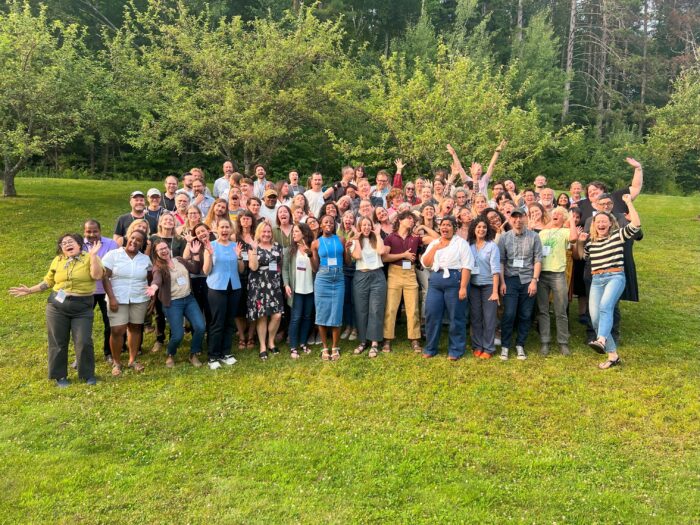
After many years of planning, NSAC completed a new 5-year strategic plan and has begun a new 2-year policy priority-setting process to be ready for 2026-2028 and beyond. Earlier this year, NSAC also developed an interactive time of our coalition’s history.
Looking Ahead to 2026
2025 presented steep challenges, requiring us to defend decades of hard-won progress while continuing to push forward. This year reinforced the importance of being resourceful and creative in a rapidly changing policy landscape – and we’ll keep it up next year too. Farmers, ranchers, and families nationwide all deserve a food and farm system that nourishes people, stewards our environment, and builds strong economies: we believe this is a future everyone can help create. Here’s a preview of what’s to come from us in 2026:
- We will continue to campaign around the priorities our members and their thousands of farmer and community leaders bring to our shared table: reforming the farm safety net, bolstering resilient local and regional food systems, and fostering climate change resilience. We’ll bring these priorities to appropriations, to a potential new farm bill, to USDA, and everywhere in between here in DC.
- We’ll gather in person together with our members and farmer leaders as always: in DC this winter and out in the field in August. This time together helps us build our strategies and strengthen our relationships as we learn from one another and advocate together.
- Our analysis – always free and available to the public here on our blog – will continue. We will continue to highlight what’s happening in DC, what it means for farmers and eaters, and lift up ways for all of us to be heard on the issues that matter for food and farms.
Throughout 2026, we will continue mobilizing grassroots action, delivering timely analysis, and supporting our members and partners as we build momentum for a sustainable, resilient, and equitable farm and food future.