
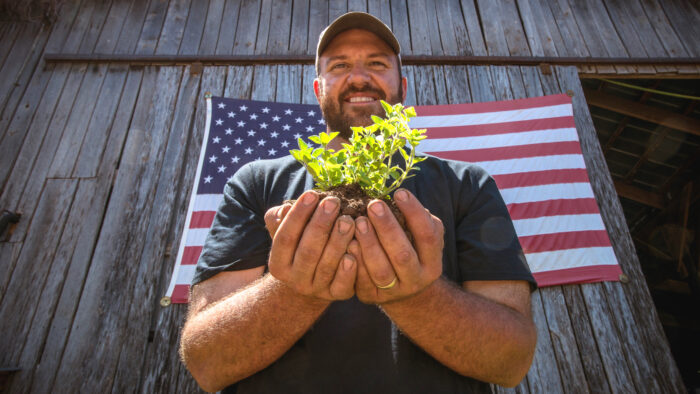
“Farmers have waited far too long for a new farm bill while dealing with rising input costs, market volatility, and shrinking margins,” said Darin Von Ruden, a Wisconsin farmer and president of the state’s Farmers Union chapter. Farmers across the country agree and have been clear with Congress: they need a new farm bill that provides investments and policy solutions that will meaningfully improve not only the immediate crises farmers are facing, but also the long-term resilience and viability of their farms. As the House recently passed its Farm, Food, and National Security Act of 2026 and attention turns to the Senate, this blog post uplifts farmers’ perspectives on how the House bill falls short of what they really need to see from a new farm bill, and what changes are urgently needed in the Senate and any final version. Grounded in comments from small, mid-sized, and diversified producers, these stories reveal what’s at stake for conservation, local and regional food systems, the farm safety net, and the basic capacity of the US Department of Agriculture (USDA) to serve the people who grow our food.
The National Sustainable Agriculture Coalition (NSAC) opposed the House farm bill as it offered only scattered policy improvements without the resources to fuel them. Members of Congress who voted for the bill were quick to point to support from farmers, making the same mistake previous farm bills have made: monolithing farmers and suggesting status quo ‘one-size-fits-all’ policy approaches will benefit all farmers. As focus shifts to the Senate Agriculture Committee, it is important to uplift the perspectives of farmers who believe the House farm bill does not fully address their needs. Right now, Congress is at a crossroads – they could take the quickest possible path, keep things ‘business as usual’ and pass a farm bill filled with short-term bandaids, or they can work towards a pragmatic, comprehensive, and fair farm bill that fosters food system resiliency, improves farmers’ livelihoods, and sets up the next generation of American farmers to thrive.
Farmers Want a Better Farm Bill
While the general public may not closely track the farm bill, farmers with operations of all shapes and sizes certainly do. After the House passed its farm bill proposal, NSAC surveyed its member organizations to hear farmers’ opinions, with responses ranging from small urban growers to large row crop operations. While perspectives differ based on growing practices, experience with federal programs, and geography, a common thread was the persistent challenge of accessing federal programs that would improve operations and overall viability, exacerbated by limited conservation program funding, understaffing at USDA agencies responsible for program outreach and implementation, or the outright termination of popular, effective programs.
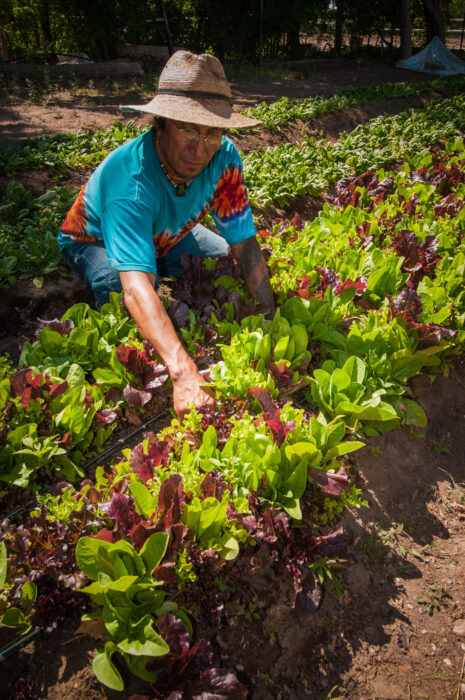
As the Senate prepares to move forward with its farm bill proposal, these farmers’ stories should be heard, considered, and addressed. The farmers who agreed to provide stories had the choice to be named and quoted in this blog post or to contribute anonymously. Quotes from farmers who chose to remain anonymous are attributed only by geography.
A Farm Bill that Leaves Many Farmers Behind
Below are some of the most salient points farmers shared with us about the inadequacies of the House’s farm bill. Commentary is organized around four key areas: threats to climate and conservation efforts, local and regional food systems, a fair farm safety net, and USDA’s ability to effectively fulfill its mission of serving American farmers and the public.
Climate and Conservation
While there were some bright spots in the Conservation title of the House farm bill, farmers were quick to point to an overall lack of new investments needed to address high demand for conservation. Farmers in Iowa and Illinois cited reduced funds for Natural Resources Conservation Service (NRCS) programs like the Environmental Quality Incentives Program (EQIP) and the Conservation Stewardship Program (CSP). One farmer specifically emphasized that these programs are in high demand because they are so accessible and beneficial for small acreage and urban farmers.
Patrick Brown of Brown Family Farms in North Carolina says it’s in his blood to farm. His grain operation was established in 1865; for generations, his family has weathered storms and taken advantage of opportunities like EQIP to sustain their business. He spoke of the increased competition for these cost-share programs that are likely to occur with less funding available, saying: “up to $600 million has been completely cut from EQIP… making the pot of money that you compete for in the program smaller.” He added that, as currently structured in the House farm bill, it carves out $100 million per year from CSP for state soil health programs. Instead, he suggests soil health programs should be funded through different programs like RCPP, “so that the CSP funding pie does not get smaller for producers like [us],” he said.
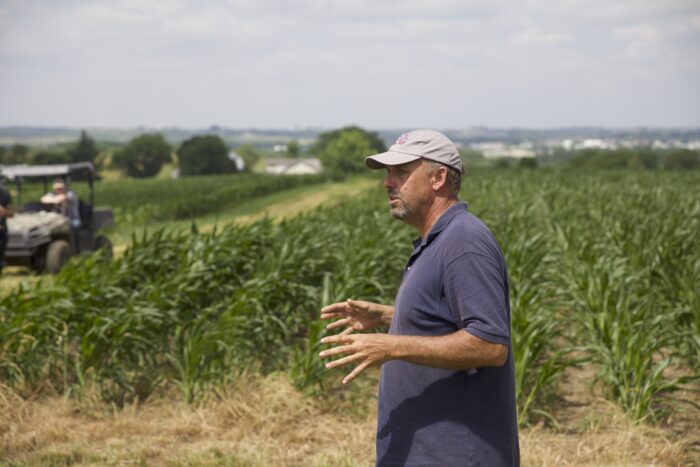
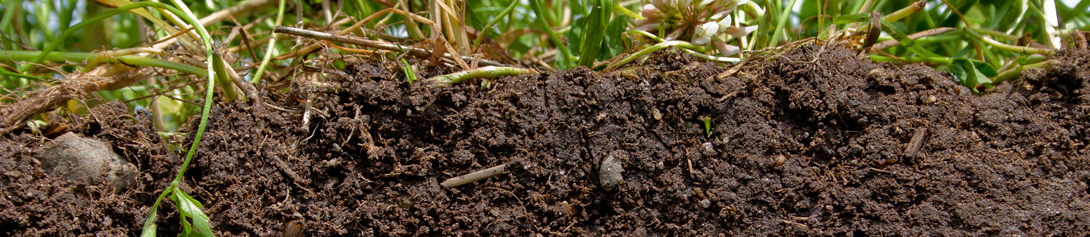
Farmers adopting conservation practices that protect the soil, water, and air – by extension improving their neighboring communities’ health and wellbeing – should be supported in their efforts. Instead, the bill siphons off resources from the nation’s most popular conservation programs, increasing competition for limited funding. Coupled with the unresolved staffing crisis at NRCS and USDA as a whole, this is a recipe for reduced access and degraded customer service for all farmers, particularly small farms. Any farm bill that passes this year must both preserve and increase resources for conservation programs and ensure robust staffing levels for NRCS.
Local Food Systems
In Ohio, Shagbark Seed & Mill’s founder, Michelle Ajamian, expressed disappointment at the lack of investment in local food systems. Speaking about the Local Food Purchasing Assistance Program (LFPA), which was terminated two years ahead of its expected run, Ajamian said, “In just two years, we were able to purchase over a half million pounds of black beans from our region’s organic farmers for all 12 Ohio food banks.” She later elaborated that the termination of LFPA pushed the mill into the red, forced them to lay off workers, and bear the news to the farmers who had already planned fields and purchased seed that they would not be able to bring in their beans for the foreseeable future.
“When the billion-dollar program that purchased crop from farmers in all 50 states was terminated without notice, I had hoped the farm bill would include local buying for food access, but it doesn’t look good. So much for the administration’s promise to ensure more money goes to farmers to feed our citizens,” Ajamain said.
Another farmer in Pennsylvania added that there were not enough funds allocated for SNAP, SNAP-Ed, which saw its funding slashed by last year’s reconciliation bill, or for local food purchasing. When most think of the threats to SNAP, many think of small children, the elderly, and those most vulnerable in our society. Notably absent from these conversations are how farmers and their bottom lines will be impacted. Both SNAP and SNAP-Ed have been demonstrated to be spurs of economic activity, with every dollar spent on SNAP reportedly generating $1.50 in economic activity.
An Illinois farmer noted that the loss in funds for SNAP in the farm bill signaled a massive failure for those accessing locally grown produce. For his part, Brown, in North Carolina, shifted his focus out. “Overall the bill does not include nearly enough of the priorities that regional food systems and small and mid-size farmers need,” shared Brown. In March, NSAC argued that disproportionately investing along the food supply chains could lead to supply without adequate markets available for producers, a point farmers we spoke to inherently understood.
Investing in programs that allow farmers to gain access to a stable local market and meat processing facilities closer to home, while making food more accessible to millions of people who struggle to put food on the table, is a simple way a farm bill can invest in strengthening local and regional food systems and economies while actively creating jobs in rural communities. The House farm bill fell short of the mark in investing in such programs. While it did allow for the creation of a program that would replace LFPA, for example, it did not include funding for that program.

Safety Net for Small and Beginning Farmers
Rising production costs, low crop prices, and unpredictable market conditions are threatening farmer livelihoods. The current economic environment replicates the conditions preceding the 1980s farm crisis, during which farmers were pushed off their land, farm consolidation skyrocketed, and rural communities collapsed, many never to recover. This catastrophic precedent illustrates the critical role the farm safety net plays in maintaining farm viability under the present circumstances.
The farm safety net provides support through disaster assistance, farm credit, and crop insurance. The current construction of the farm safety net typically tends to function well for most large commodity operations; however, most small, beginning, and diversified farmers report that these systems don’t benefit their operations. As stated by two farmers from Illinois, the farm safety net doesn’t work for them because it is “hard to access for small diversified farm systems.”
The impacts of an insufficient farm safety net are severe. Without strong support, a large percentage of small, mid-sized, diversified, and beginning farms may be forced into foreclosure, leading to scarcity of local fruits and vegetables, and an increase in expensive imported produce. As demonstrated during the 1980s farm crisis, policy decisions that leave out wide swaths of farmers can decimate rural communities and squander their trust. A chain is only as strong as its weakest link, which means the Senate has an opportunity to avert a second farm crisis by supporting the farms that are most vulnerable to external factors through this farm bill.
Understaffing and Access
In 2025, 20 % of USDA staff left the agency either because they were abruptly laid off through Reduction in Force or through the Deferred Resignation Program in a purported effort to streamline federal services and reduce waste and fraud. This broad and indiscriminate staff reduction left 141 counties across the United States with zero USDA support staff, while 1,197 counties, or 53 percent of counties in the country, had a net staff loss. Understaffed offices limit USDA’s ability to fulfill its mission of serving farmers. “The bill does next to nothing to increase staffing levels at local NRCS and FSA offices, a key concern we’ve heard from many of the farmers…especially after the huge staff losses of last year,” Brown said.
One Illinois farmer expressed her concern about grant funding, explaining that “a lot of small farmers rely on [grant funds] to sustain themselves and continue to help at-risk populations.” She added to the urgency of the matter, noting that “local farmers are important and are becoming obsolete.” A couple of other Illinois farmers likewise highlighted the lack of support for farmers like them in the House farm bill version. “Loss of USDA staff makes access even more difficult,” one remarked. Another explained that adjustments to FSA loan programs were improvements on the surface that could easily go to expanding existing large operations that don’t need government support while leaving small farms with even less access to those loan programs. “Combined with no meaningful increase in total available funding, means that smaller operations will likely lose out at the local FSA office,” he shared.
USDA has been nicknamed the “People’s Department,” but without resources that allow it – and, crucially, its staff – to fulfill its mission, farmers are left scrambling to find someone who can help them when they want to apply for a cost-share program, write a conservation plan, or receive a loan.
A Strong Farm Bill
As the Senate drafts its own version of the farm bill, it must keep in mind everyone who participates in our food and agricultural system, whether they run large, medium, or small operations. It must consider those who grow diverse and specialty crops, who are engaged in localized food production and marketing, and those using conservation practices. While farmers shared the shortcomings of the House version of the farm bill, they also had a clear vision for what a strong farm bill that supported all farmers would look like.
Von Ruden was quick to point to the need to support small farms. “That means a stronger safety net, meaningful support for conservation, and policies that address consolidation,” Von Ruden said.
One of the farmers in Illinois echoed that sentiment. “A strong farm bill aggressively reduces consolidation in our food and farm system and prioritizes the needs of small and beginning farmers and those who have been historically disadvantaged by prior Farm Bills,” he explained. He pointed to a state program in Illinois called the Local Food Infrastructure Grant program as a model that the federal government could explore. “Federal funding has largely shied away from investment in hard assets due to concerns of fraud or negligence. I would support greater oversight, including direct farm visits and supported audits, if it meant that the USDA was investing more directly in the relocalization of our food system,” he closed.
A farm bill that also supports those who have been traditionally disenfranchised resonated with Swanson, who shared what a strong farm bill meant to her: “Being allowed to stand up for minority populations while supporting small food production.”
Another farmer in Ohio reinterpreted what is implied in the title of the House bill as “Farm, Food, and National Security Act of 2026,” by saying that to her, a strong farm bill “focuses on homeland security, which means nothing less than supporting Family Farms and the food processors that they work with [who] are committed to growing and distributing healthy food for all while keeping soil and water clean and fertile. Give them the hand up to transition to organic and install on-farm renewable energy systems to ensure we have food for all.”
As the Senate takes up the responsibility of crafting a meaningfully bipartisan farm bill, these stories offer members of the Senate Agriculture Committee grounding in what is needed to draft a farm bill that can adequately address the needs of all our nation’s farmers.