
FOR IMMEDIATE RELEASE
Contact: Laura Zaks
National Sustainable Agriculture Coalition
lzaks@sustainableagriculture.net
Tel. 347.563.6408
The Cynthia Hayes Memorial Scholarship honors the co-founder of the first network for African American organic farmers in the United States by providing $5000 scholarships to two undergraduate students and one graduate student who identify as Black and/or Indigenous.
Washington, DC, June 30, 2026 – At the end of May, the Cynthia Hayes Memorial Scholarship Review Committee, composed of representatives from the Southeastern African American Farmers’ Organic Network (SAAFON), NSAC, and an existing Cynthia Hayes Memorial Scholar, completed the meticulous process of discussing this year’s applications. With joy and gratitude for each of the students who submitted applications, the Committee is proud to present this year’s scholars.
Daniel Sanders is a citizen of the Seminole Nation of Oklahoma and is working towards a Bachelor’s degree in Applied Industry Leadership at Oklahoma State University Institute of Technology. His passion for food sovereignty came after getting a work-study position in the campus garden at College of Muscogee Nation. It was there that he became closer to his Seminole/Mvskoke roots and his people’s traditional agricultural practices. He learned of the large communal fields his ancestors planted. Their crops were grown organically, with love, and for the entire community. This is a value he holds dear to his heart and strives to incorporate in all of his work.
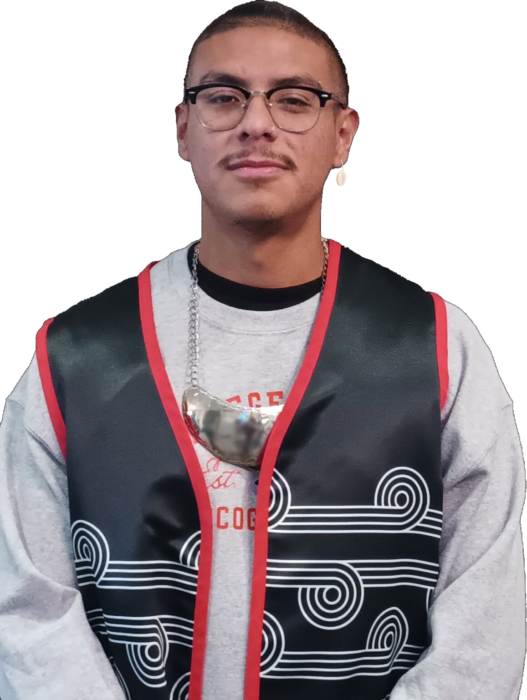
“Food is medicine. I believe a healthy diet is essential for the well-being of an individual and their community. By combining my ancestor’s agricultural knowledge with modern sustainable growing practices, I hope to help underrepresented communities gain access to food, improve health outcomes, strengthen food sovereignty, and build more resilient local food systems,” says Daniel.
After his work-study position, Daniel continued to work for College of Muscogee Nation Extension as a research assistant. This allowed him to further help educate the surrounding community of Mvskoke traditional agricultural knowledge, as well as help community members start their own gardens, and conduct research on Black Mvskoke crops.
Sulaiman Mathew-Wilson is a rising senior at Howard University in Washington, DC, pursuing a Bachelor of Arts in Honors Environmental Studies with a Minor in Spanish. Originally from Jersey City, New Jersey, Sulaiman’s introduction to food systems work began in his hometown, where witnessing food access inequities and the effects of gentrification shaped his early commitment to environmental justice.

“Food justice and environmental justice are inseparable—the same communities denied access to clean air and water are often also denied access to healthy food. My goal is to ensure that land, food, and a healthy environment are recognized as rights, not privileges, and to build the policy frameworks that make that a reality for frontline communities,” says Sulaiman.
In high school, Sulaiman worked as a Student Grower at Bethel AME Ardmore Victory Gardens, putting freshly harvested produce directly into the hands of residents with limited access to fresh food. Since arriving at Howard, he has continued this work at Halo G.R.E.E.N. Garden, where he now serves as President. Sulaiman is passionate about regenerative agriculture, food sovereignty, and building a food system rooted in justice and equity for Black and Indigenous communities.
Peninnah “Nina” Morgan is a community organizer from rural Alabama whose work focuses on environmental justice, food sovereignty, and community-driven planning. Her interest in food systems began as a volunteer with Flash Mob Grow Space, a Birmingham-based organization that used guerrilla gardening to expand access to healthy food and strengthen self-determination in historically disinvested neighborhoods. That experience sparked a deep appreciation for the ways farming can cultivate not only food, but also community power. It later inspired her to work alongside community members to organize pop-up free markets that distributed fresh food, PPE, and other essential resources at the height of the COVID-19 pandemic.
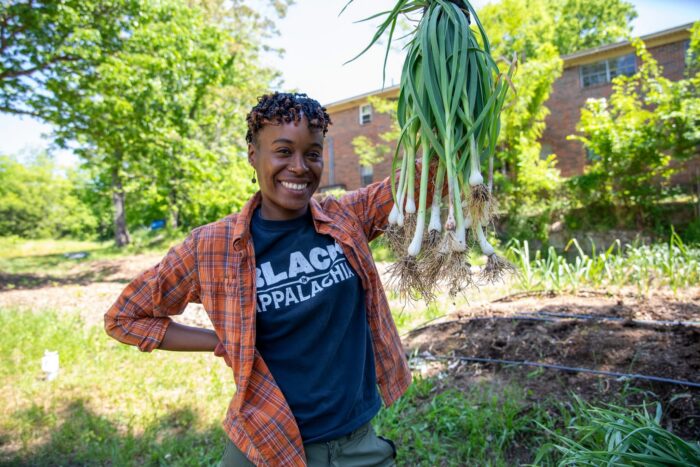
“‘Destroy through building’ has become my guiding philosophy. As a community organizer working on the frontlines of environmental justice, I see this as transforming systems rooted in exploitation and harm by building a political economy grounded in care, human rights, and collective stewardship. Through landscape architecture, planning, and agroecology, I hope to support communities impacted by extractive industry and austerity in building just and resilient futures,” says Nina.
Currently, Nina serves as an apprentice with Fountain Heights Farms Cooperative, supporting Black farmers across Central Alabama while learning Afro-Indigenous agricultural practices. She is also pursuing a dual Master’s degree in Community Planning and Landscape Architecture at Auburn University, where she is focused on learning how agroecological design, and community-driven planning can advance environmental justice and build community power. In her spare time, she enjoys working outside at her off-grid homestead and learning space, Humble Hill.
About the National Sustainable Agriculture Coalition (NSAC)The National Sustainable Agriculture Coalition is a grassroots alliance that advocates for federal policy reform supporting the long-term social, economic, and environmental sustainability of agriculture, natural resources, and rural communities. Learn more and get involved at: https://sustainableagriculture.net
###