
A new US Department of Agriculture (USDA) rule geared towards increasing healthy food options for families that receive Supplemental Nutrition Assistance Program (SNAP) benefits has generated confusion for farmers, farmers markets, and other local food stores that accept SNAP or plan to. The rule is currently set to take effect on November 4, 2026. This blog post provides an overview of the updated stocking requirements and provides examples of how farmers and other local food vendors can continue to accept SNAP under this updated rule.
SNAP Spending Benefits Farmers
SNAP benefits are a monthly cash benefit that supports families in purchasing staple food items. The program has evolved significantly over time from its paper food stamp origins to today, when families spend their benefits via electronic debit cards at a variety of in-person and online locations (grocery stores, farm stands, corner stores, online, etc.). For nearly three decades, USDA has implemented initiatives that encourage SNAP spending directly with farmers. While this spending is small relative to the total annual SNAP spending, these are nevertheless meaningful purchases for farmers and their communities.
2025 Highlights
| Vendor Type | Average Purchase Amount | Total Value of Redemptions |
| Direct Marketing Farmer | $52.18 | $28 million |
| Farmers Markets | $34.13 | $50 million |
| All stores (including above) | – | $101.7 billion |
Any farmer, retailer, or farmers market must apply to accept SNAP benefits with USDA. There are two ways, called Criteria A and B, that entities can qualify as SNAP retailers. Staple grocery foods1 comprise the majority of most farms’ or farmers markets’ sales, and these farms can qualify by Criterion B, which considers the overall value of sales. Criterion B is unaffected by the new rules. Farms, markets, or other local food stores that sell a significant amount of prepared foods, value-added items, nursery items, non-food items, or foods that are not considered staple foods1 must qualify by Criterion A. The new rules have stricter requirements to qualify by Criterion A.
Updated Standards
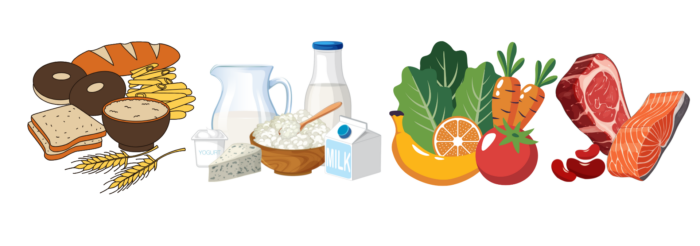
Last year, the Food and Nutrition Administration (FNA; formerly the Food and Nutrition Service or FNS) posted a proposed rule to the Federal Register to update the staple food stocking requirements for SNAP authorized vendors. In May, FNA posted the final rule that is poised to go into effect November 4, 2026. These new stocking requirements apply to retailers authorized under Criterion A only, and do not affect entities that use Criterion B. In order to be an authorized vendor, retailers’ inventory must include:
- Seven varieties in each of four staple food categories—dairy, grains, protein, and vegetables or fruits,
- Three units for each of the varieties, and
- One perishable item in three of the four categories.
For example, a store could stock the following dairy product options to comply:
- Gallon liquid dairy milk
- Half-gallon liquid oat milk
- Quart-size plain yogurt
- 16 oz block of cheddar cheese
- 2 cup bag of shredded mozzarella cheese
- 2 cup bag of plant-based cheese
- 16 oz sour cream
The store would have to stock at least 3 units for each of these foods (for a total of 21 dairy units). This offering would fulfill one of the three perishable food category requirements. USDA offers an interactive calculator to visualize this further.
Minimal Impact on Farmers Markets
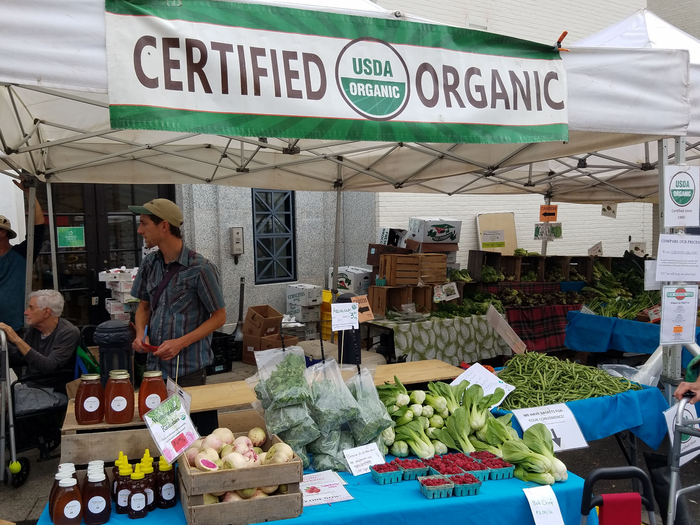
This new stocking requirement does not apply to any vendor that utilizes Criterion B. Most farmers markets, farmers, and specialty local food stores, such as a butcher, qualify as an authorized vendor based on Criterion B. In order to meet this requirement, more than 50% of all sales must come from the sale of staple food items.
Below are a few examples of farmers and local food businesses and whether they would qualify as a SNAP vendor using Criterion B.
| Local Business Type | Products Sold | Proportion of Sales | Meets Criterion B |
| Farmer A | Seasonal vegetables (squash, tomatoes, corn) and pork (ground, shoulder, and other cuts) | 20% vegetables 80% pork | Yes 100% of sales are from staple foods |
| Farmer B | Seasonal fruits (raspberries and blueberries) and honey products (raw and whipped) | 45% fruits 55% honey | No Honey is not a stable food, and the majority of sales come from the honey |
| Farmers Market | 5 vendors sell seasonal vegetables or fruits only 2 vendors sell cheese 1 vendor sells bakery items 1 vendor sells meat and soap 1 vendor sells coffee | 50% vegetables and fruits 15% meat 12% cheese 10% bakery5% soap 8% coffee | Yes Even if the bakery items were categorized as accessory foods, the sales of vegetables, fruits, cheese, and meat are more than 50% of total sales |
| Farm Stand (with ice cream shop) | Seasonal vegetables (tomatoes, corn, peas, okra), assorted dairy products (butter), and ice cream | 35% vegetables 8% butter 57% ice cream | No Ice cream is considered an accessory food, not a staple food. There are insufficient sales of staple foods |
| Mobile Farm Stand | Seasonal vegetables (kale, lettuce, peas), Dried beans (pinto), Dried peas (field peas), honey | 45% vegetables 15% dried beans 5% dried peas 35% honey | Yes 65% of sales come from staple foods |
At this time, stakeholders do not anticipate significant impact on direct marketing farm operations or farmers market settings. However, these updated standards may impact the ability of corner stores and small, non-traditional grocery outlets to maintain their authorization.
To learn more, reference either the final rule or the latest guidance from FNA. Any questions regarding this policy should be directed to: SM.FN.RPMDHQ-WEB@usda.gov.
Leave a Reply