
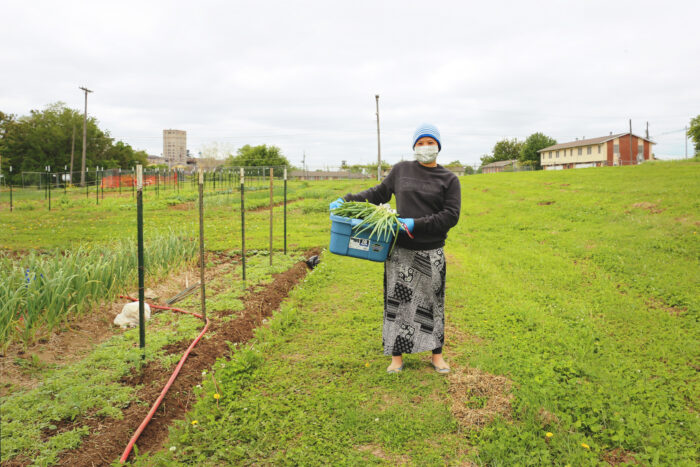
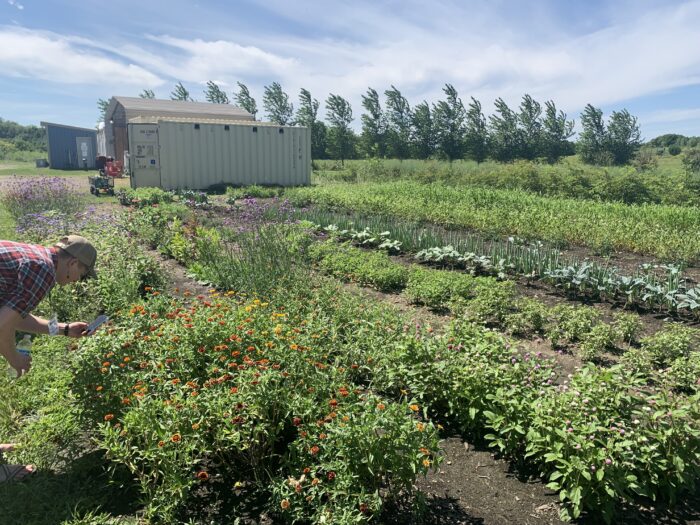
Urban farming is often portrayed as raised wooden beds or community garden plots on overgrown vacant lots in cities around the country. The more prominent, but untold story is how urban farming provides access to land for beginning farmers or those without the means to purchase it, or how these farmers creatively manage limited resources, rebuild soil health, and develop productive businesses with minimal federal support.
With stakeholder support, urban agriculture’s progress generated greater recognition of the need for formal and coordinated support from the United States Department of Agriculture (USDA). The Office of Urban Agriculture and Innovative Production (OUAIP) – established in the Agriculture Improvement Act of 2018 (2018 Farm Bill, P.L. 115-334) – has quickly grown in name recognition among urban and indoor producers, community gardens, and NSAC member networks. Funding for the Office and its programs has remained a top priority for NSAC Members since its creation. Earlier this year, NSAC touted the efforts of the Farm Service Agency’s (FSA) Urban Agriculture Outreach, Education, and Technical Assistance cooperative agreements, a public-private partnership that utilizes community-based technical assistance providers to generate a farm to FSA pipeline.
Since 2020, USDA has invested hundreds of millions of dollars in promoting the development of urban agriculture and innovative production. OUAIP has awarded nearly 200 grants and 146 cooperative agreements in local communities across 43 states and Puerto Rico. It has dutifully implemented the Federal Advisory Committee for Urban Agriculture and Innovative Production, delivering recommendations to previous Secretary of Agriculture Tom Vilsack and updating recommendations for current Secretary Brooke Rollins. It established 27 County Committees that focused on the unique needs of urban agriculture.
Yet as the federal government’s fiscal year comes to an end, there are an increasing number of reasons to believe that USDA is slowly undoing the progress it has made.
Real Results for Farmers
OUAIP implements a number of initiatives, and one of the most visible is the Urban Agriculture and Innovative Production (UAIP) grants. Since 2020, OUAIP has awarded roughly 200 grants of more than $50 million to community-based organizations, schools, local governments, and other stakeholders to design or implement projects that:
- Train farmers in production techniques suited for their unique environments and scale,
- Establish incubator farms or tool sharing programs that ease barriers for land and capital access for newer or beginning farmers,
- Develop youth or workforce development programs for aspiring farmers using indoor and hydroponic production technologies,
- And expanding access to nutritious foods through garden networks or improved aggregation systems,
- Or other activities that promote and increase the capacity of urban agriculture and innovative production practices.
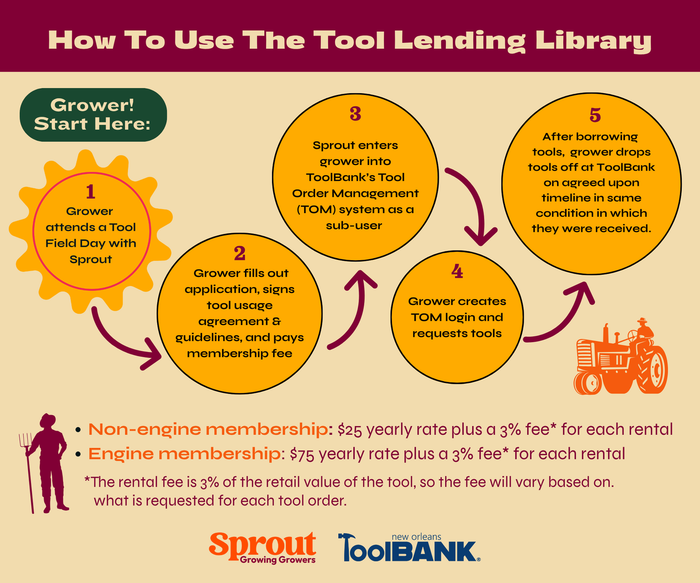
One NSAC member, Sprout, received a 2024 grant to expand The New Orleans Growers Tool Lending Library. This partnership between Sprout and the New Orleans ToolBank provides affordable access to heavy-duty professional-grade tools to reduce cost barriers, encourage cooperativism, and support the viability of urban farms and community gardens. The partnership provides new and small-scale producers with access to a wide variety of agricultural and non-agricultural tools- from two-wheel tractors and no-till drills to ladders and chainsaws. Beginning, small-scale, and urban producers often have limited capital, storage, or experience with specialized tools. This program allows farmers to try out new production techniques and tools at low cost and reduce risks associated with storing costly equipment on-farm.
One Tool Lending Library member said,
“So far I have used the gas-powered t-post driver and a battery-operated chainsaw this year. I run a 3,000 sq ft operation. It would make no sense for me to buy, maintain, and store those tools just to use them a couple times a year. But those two tools turned full days of work into less than an hour and that is the type of efficiency I desperately need. Not to mention that they show you how to use stuff too!”
Two Years of Radio Silence
Funding for OUAIP is limited to what can be secured through the federal annual appropriations process, meaning that stakeholders must annually advocate to Congress in order for the program to receive any funding at all. As a result, funding can fluctuate over time, even to the point where it almost went unfunded in FY2024. Thankfully, with tremendous work from stakeholders in the field and in Congress, the program has maintained relatively steady annual funding since its first appropriation, including $7 million in Fiscal Year (FY) 2025 and $5 million in FY2026.
Unfortunately, the last time OUAIP made awards was in FY24. Congressionally mandated funding totaling $12 million has been withheld with no explanation from USDA. Investments for beginning or emerging farmers and community food systems are especially needed as farmers face limited access to USDA Service Center resources and families face higher costs of food and fewer federal benefits to offset those costs.
Recently, two dozen Congressional members delivered a letter to USDA’s Farm Production and Conservation Undersecretary Richard Fordyce and Natural Resources Conservation Service Chief Colton Buckley requesting the release of the program funds along with an explanation for the delays.
Farmers Lose Their Seat at the Table
This year has been particularly challenging for farmers. In addition to higher input costs and loss of local markets, there has been a significant loss of USDA employees leaving county USDA offices short-staffed. This can lead to longer wait times for program applications or less capacity for staff to provide more hands-on assistance.
The good news: Local USDA Service Centers are equipped to be responsive to unique local conditions with regular input from farmers. Since 1935, Centers have offered opportunities for farmer leadership and oversight of local resources and program implementation, and since 2020, this includes dedicated opportunities to gather input from urban farmers.
The bad news: farmers and technical assistance providers affiliated with the 27 Urban County Committees have been notified that FSA will not be conducting elections for open seats this year due to an expiration of the pilot program. The 2018 Farm Bill directed USDA to establish urban and suburban committees to operate for no fewer than five years, but no language indicates that it must be limited to only five years.
The lapse of elections risks further underserving farmers in the local area and seeding distrust of the agency.
California’s two urban county committees have helped to inform our urban agriculture program outreach and implementation, and have identified how FSA programs can be integrated in the LA and Bay Area urban and peri-urban farming communities. These committee voices are invaluable, and the investment in these seats shows a commitment to the growth of our agriculture economy and communities, and to American growers, shared Keely Cervantes, Policy & Organizing Manager for Community Alliance with Family Farmers.
Solutions are in Reach
Before the end of 2026, Congress has an opportunity to address these burgeoning issues affecting urban producers.
The Senate Agriculture Committee and the House have indicated their ongoing bipartisan support for the Office of Urban Agriculture and Innovative Production and associated Urban and Suburban County Committees. The Farm, Food, and National Security Act (H.R. 7567) and the Agricultural Act of 2026 (Senate proposal) include nearly identical policy changes for OUAIP.
Both bills take steps to expand and improve the existing programs and initiatives, including:
- Directing OUAIP to develop resources for the unique conservation, resource management, and business needs of urban and indoor agriculture.
- Creating a new subgrant category within the existing urban and innovative production grants that funnels more funding directly to farmers.
- Permanently authorizing cooperative agreements with technical assistance providers.
- Removing the pilot status of the urban and suburban county committees.
- Expanding the scale of food waste and composting initiatives.
As a potential farm bill advances this year, these provisions are essential to the ongoing success of OUAIP. Additional changes, such as protecting the existing 27 named urban and suburban county committees and providing mandatory funding of $15 million annually, should be considered to safeguard previous efforts and allow sufficient funding to meet program demand.
Leave a Reply